Have you ever stopped to think about just how much information we all interact with, like, every single day? I mean, from the intimate photos on your phone, the emails in your inbox, to your company's critical secrets? Even just ideas in a brainstorming session, it's a literal ocean of valuable data, and, well, the big question always looms.
How do we keep it all truly safe? Today, we're taking a deep dive into precisely that challenge. We're looking through the lens of a powerful international standard, ISO/IEC 27002:2022.
Its official title is Information security, cybersecurity and privacy protection — Information security controls. But think of it less as some dense technical manual, and more like the ultimate blueprint, you know, a foundational guide for organizations of all types and sizes. It shows them how to identify and implement robust information security controls based on, well, internationally recognized best practices.
It's essentially a playbook for protecting what's valuable. So, our mission today, let's try and cut through the complexity of this comprehensive standard. We want to pull out the most important nuggets, help you understand a structured approach to information security without getting bogged down by all the jargon.
And just to help us navigate, it's worth knowing upfront that this document organizes its controls into four main themes: organizational, people, physical, and technological. And here's where it gets really clever.
It uses these things called attributes to provide different perspectives. This lets organizations tailor and apply these controls in incredibly flexible ways. Okay, so let's set the stage a bit.
In our hyper-connected world, why is a document like ISO/IEC 27002:2022 not just useful, but absolutely crucial? And when we talk about information that needs protecting, what exactly are we truly referring to?
Well, what's fascinating here is how broadly the standard defines information. It's really not just the obvious stuff like spreadsheets or documents or images. It explicitly includes intangible forms.
Things like knowledge, concepts, ideas, even a company's brand reputation. And in our interconnected world, all these associated assets, as the standard calls them, are vulnerable. They require protection against a whole range of risks, whether they stem from, say, natural disasters or accidental human error, or of course, deliberate malicious attacks.
Information security, at its core, it isn't a one-off task. It's something that's achieved by implementing a suitable kind of dynamic set of controls. And this really encompasses everything, from high-level policies and internal rules, down to detailed processes, procedures, organizational structures, even specific software and hardware functions.
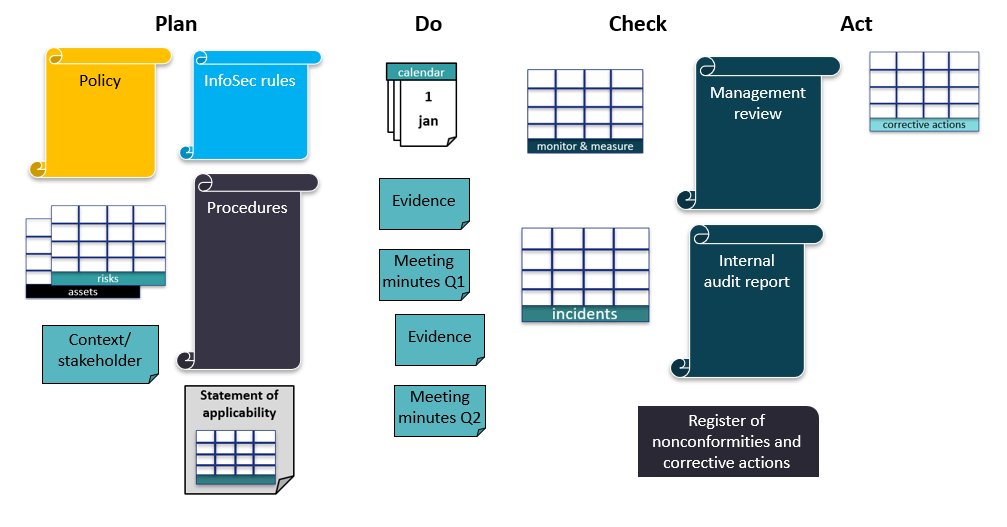
The real insight, I think, is the goal: to continuously define, implement, monitor, review, and improve these controls, all to meet specific security and business objectives. When an organization adopts this kind of holistic, coordinated view of its information security risks, well, that's what we call an Information Security Management System, or an ISMS, like the one based on ISO/IEC 27001, is a comprehensive, layered approach to keeping your assets truly secure.
Right. And if you're listening and thinking, OK, this sounds like something only massive corporations need to worry about, you might be missing the bigger picture. The principles here apply to any entity handling data.
That includes your own digital footprint. It really highlights the intrinsic value of information itself, doesn't it? Whether it's personal or corporate, it's about understanding the value of what you're protecting.